
- Toronto rapper Snow’s 1990’s hit “Informer” is alive and well in South America. I don’t think I’ve heard it in Canada in 15 years but I could not go a single day anywhere in South America without hearing “alickybooboomdown” at least once.
- Even further to the points about customer service I also found people are generally more formal and there is an etiquette to public interactions. The response I would get from walking into a store ask asking “do you have glue?” was stunningly different from, in my broken Spanish: “Hello, good afternoon, how are you doing, I am looking for glue, do you sell it?”. Along the same lines people absolutely say hello, goodbye, how are you, etc much more often in public. Was fun, I enjoyed that.
- At 46 years old I have finally learned the lesson of humidity. This trip was the first time I’ve ever experienced real humidity. I have learned that I do better with 45c and dry in Egypt than 28c and 95% humidity in Central America.
- Fresh milk pretty much does not exist in Latin American stores. In 99% of stores all milk with be shelf stable UHT milk in tetra-packs. I believe fresh milk is available but you normally have to setup delivery on your own from a dairy.
- There are no scams, as far as I can tell. After 5+ months in Latin America people tried to scam me exactly zero times. Unless you include having to pay soldiers to return my passport, which is more armed robbery than a “scam”, it’s not like I was tricked into paying to get my passport returned.
- I pack extremely light, it’s taken a life to learn the lessons and by this point in my life I pack EXTREMELY lightly. I get that different people pack differently but the number of people, especially young people, lugging around absolutely INSANELY huge and overstuffed packs, OMG WHY?!
- Packing so lightly did have some negative effects though. Lots of border and customs officials got suspicious of the length of my travel vs the size of my pack. I think I got secondary searched at least 4-5 times.
- There seems to be a real respect for older people, I mentioned earlier the amount of time people spend in line, I noticed that older people are usually moved to the front of those lines or there is a separate line just for them.
- While in some ways I felt a more conservative aspect to social/public life I also noticed the opposite when it comes to public affection. Heavy duty makeouts on the subway or even a full force restaurant make out approaching actual intercourse in public seemed totally acceptable.
- Proof of Forward Travel is still a thing in South America. More than once an airline crew attempted to refuse my boarding because I didn’t have upcoming tickets exiting the next country. The idea that a country won’t let you in unless you have tickets out is not super common anymore in most developed countries, was interesting to have to sweet talk my way onto flights. At one point I had to frantically go online on my phone while the flight was boarding and buy a $10 bus ticket out of Paraguay a month down the road, that I would never use, just to prove I had plans to leave Paraguay eventually.
Author: deanbergen
South America – Ten Small Thoughts & Things – Part 3
- Cocktail bars are somewhat common but cocktails follow a different philosophy of flavour in South America compared to North America/Europe. For example, what I’m used to is that if you like an Old Fashioned and you see a menu offering a Vanilla Old Fashioned what you’ll get is a traditional Old Fashioned with just the lightest hint of vanilla. I found, very consistently, that in Latin America if a cocktail bar features a Vanilla Old Fashioned you will get an Old Fashioned with an endless and often overpowering vanilla syrup kick in the mouth. Whatever the feature flavour of a cocktail is, it will be a HUGE PUNCH IN THE FACE amount of that flavour.
- Most bars will not have bar seating. It’s just not a thing. The concept that the bartender is part of your outing, that you chat with them, include them, etc, does not exist. Likely again related to the concept of customer service not existing.
- Street food is safer than you think, if you have a brain. I travel with penicillin and I wouldn’t call my guts particularly tough at all but after 5+ months of eating from every kind of street food vendor all over South America I only got slightly sick one time (you were right Candise, it was totally that soup you skipped). I use common sense, go to places that are busy and are cooking things to order, and am rarely concerned.
- Rough areas are safer than you think, if you have a brain. Every single city I spent time in is considerable more dangerous than any city in Canada yet I never felt unsafe a single time, not once. There were times of being more aware of my surroundings, there was a night when I had to walk home through a rough part of Rio around 2am and kept my head on a swivel, etc. But really, use your brain and you’ll be fine almost every time. You’re safer in the worst part of the city at 2pm in a market with 1000 people around than you are in the nicest part of the city at midnight with empty streets all around.
- Time I: Time works very differently. I knew this going in but it’s different to be immersed in it day after day, restaurants and businesses are just kind of open whenever, they all post hours but there appears to be little connection between posted hours and if they will or will not be open. I did my best to adjust to this, with limited success. One night I walked to a bar that claimed to open at 6pm, it was 6:40pm and they were shut tight, a guy was setting up chairs inside up so I asked him when they open…. “6pm”…. cool cool.
- Time II: Subway time…. in more than one city the train platform signs counting down the time until the next train turned out to be completely random. They just say a number of minutes and count them down until the next train until the train actually comes, then they jump to “1 min”, lol.
- Both Ecuador and Panama use only the US Dollar. However they each issue very different $1 coins, I arrived in Panama City with a lot of Ecuadorian $1 coins and every single time I used them people had a reaction and I had to demonstrate that it was real American money.
- Latin America is obsessed with “Viking Bars” and I cannot fathom why. Every city will have at least one, usually many more. A “Viking Bar” is an extremely vaguely Norse-themed burger and beer place. Basically it’s a bar with a Viking helmet hung up somewhere.
- You MUST tip your grocery bagger. In most of Latin America the bagger is not a store employee, the only pay they get is tips.
- Further to my earlier point about awful customer service I also noticed that a second visit changes everything. No matter how I was treated in a business the first time I would invariable get a warm welcome the second time. The places I ate at for a week or more started to feel incredibly welcoming.
South America – Ten Small Thoughts & Things – Part 2
- In Latin America, lemons and limes are usually considered the same thing: “limon”. Buenos Aires was the first time all trip I saw actual yellow lemons. In most of Mexico, Central and South America lemons just do not exist. If you do find them they will still be called “limon” or occasionally yellow limes “limon amarillo”. They will also usually be expensive as they are imported from the US. So “limonade” is a super popular drink everywhere but it’s lime and sugar and water, never lemon. Also, the quality of the limes is stunning, and the amount of juice is nuts, squeezing a lime results in just acres of brilliant tasting juice.
- ATMs globally seem to have gotten much worse in the past 20 years, there’s more of them but interoperability is worse. I travel with two Visa, one Mastercard and two bank cards and I still had trouble with lots of machines in lots of places. 15 years ago every ATM in Mexico worked with every card I had, not so anymore. In Ecuador I never got a single ATM to work with ANY card.
- In place of ATMs I started relying much more on Western Union, they are on every street corner across Latin America. Put the app on your phone, transfer money from your bank to your Western Union account, withdraw it in local currency wherever you are 5 minutes later.
- South American Money Exchanges have little interest in South American currency. If you want to exchange US or Canadian or Australian dollars or Euro or Yen or French Francs or Swiss Francs or British Pounds for local currency NO PROBLEM, but if you want to exchange cash from most South American countries in most other South American countries that don’t share a border…. NOPE, never gonna happen. For example, multiple attempts to exchange Uruguayan Pesos for Peruvian Sols got me nothing but head shakes and blank stares.
- Beef will be overcooked, potatoes will be undercooked. Chicken will be the best you’ve had.
- It’s not so much that customer service is bad in Latin America, it’s more that the entire concept of customer service just does not exist. I could write pages on this one but I fear it would sound a bit negative. Eventually I learned to treat each such encounter as a game, trying to win them over.
- Get an e-sim, seriously. The days of hunting around each new country for a physical sim and constantly opening your phone to swap them are over. Switching to an e-sim made a huge, gigantic impact on my travel. Also, I used a bunch of e-sim apps and settled on Airalo as the best one, by far.
- I know 100% that catcalling women exists in Vancouver but I’ve never seen or heard it. Throughout South America, especially Peru, it appears to be an almost constant thing.
- Airport lounges are usually worth the cost. My credit card gets me six free airport lounge visits a year, after that it’s about $30us per visit. That might sound pricey but when you factor in that you get a buffet, coffee, drinks, alcohol, comfy seating, high speed internet, plus occasionally sleeping couches and showers it is easily worth it.
- In my opinion, throughout most of South America, the quality of your major local standard beers is better than in Canada. Also in most of South America there is an almost obsession with serving beer cold. You’ll receive a nearly frozen bottle, in a frozen sleeve, with a small chilled glass, etc. It’s lovely and incredibly refreshing. Having said that, I still prefer cider but it doesn’t seem to exist in South America for the most part.
South America – Ten Small Thoughts & Things
A few things I noticed…
- Grapefruit/Pomelo flavoured soda is super popular across South America, and it’s awesome. Each corner market has at least 2-3 brands and I’m addicted to all of them. No idea why Canada gets Fresca and nothing else for grapefruit pop but I will miss these.
- Bureaucracy: You will be asked for your passport or other ID number a LOT, seemingly pointlessly and randomly. Often the ID number they are asking for is something only citizens would have so I would have to just make up random numbers. Lots of ATMs were unusable because I didn’t have whatever random local ID number it wanted. In general a seemingly pointless bureaucracy is ever-present across South America. Maybe it’s something to do with job creation or whatever but it’s nuts. I’ve filled out endless forms and papers and receipts, none of which will even be glanced at again. Most of the time the form I filled out was never even glanced at, I could have written anything. One coffee shop couldn’t even sell me a coffee without my passport number, license number, phone number and email. One museum wouldn’t let me in until they knew my mother’s maiden name and what my father did for a living. For locals it seems even worse, people spend insane amounts of time in line for anything and everything, any service office, the power company, phone company, transit, a notary, a bank, any government office…. ALL will have a huge waiting room and a huge line, getting anything at all done appears to invariably involve extended periods of time in various lines.
- As my time in Spanish speaking countries grew I found that my explanation that I don’t speak Spanish (“Lo siento, no entiendo Espanol”) carried less and less weight, lol. I certainly do not speak Spanish but it seems like my growing vocabulary and comfort with the Spanish that I do know means that more and more often my insistence that I can’t speak Spanish gets waved away and people just continue on in Spanish with me.
- An “Auto Service” is not a mechanic, it’s a generic term for a convenience store.
- A “Drugstore” is not a pharmacy, it’s a generic term for a convenience store, which never carry drugs.
- Lottery stuff is segregated to its own stores/kiosks, they cannot be sold anywhere else, this is awesome, no waiting behind scratch and win morons at 7-11.
- Be vulnerable. Whenever I’m interacting with a local, esp with a language barrier, I take the first chance I can to be vulnerable, be silly, to be goofy. It’s a shortcut to fun interactions that almost always helps. People talk about being tough, firm, etc when travelling, I get that but I really feel I get a lot further being soft.
- Alcohol is sold pretty much anywhere. In some countries like Brazil there appears to be basically no rules around drinking. You can buy a drink on the sidewalk, on the beach, outside the subway station, it’s all good. I also never saw it being a problem a single time.
- Every single Argentinian restaurant will feature both a salmon filled ravioli and a pumpkin filled ravioli. I swear it must be the law there. In general all restaurants in Argentina that serve Argentinian food share 90% the exact same menu, it’s quite odd.
- I’ve noticed a complete reversal of people’s preference for fizzy or flat bottled water as I’ve travelled. In Mexico they strongly prefer extremely carbonated water (the most bubbly on Earth, they will proudly inform you) and you’ll get bubbles by default if you ask for a bottle of water. By the time I got to Argentina this completely reversed, fizzy water is lightly carbonated and people will assume you want flat. So much so that I was often served flat water even after ordering bubbles.
I do love a mystery…
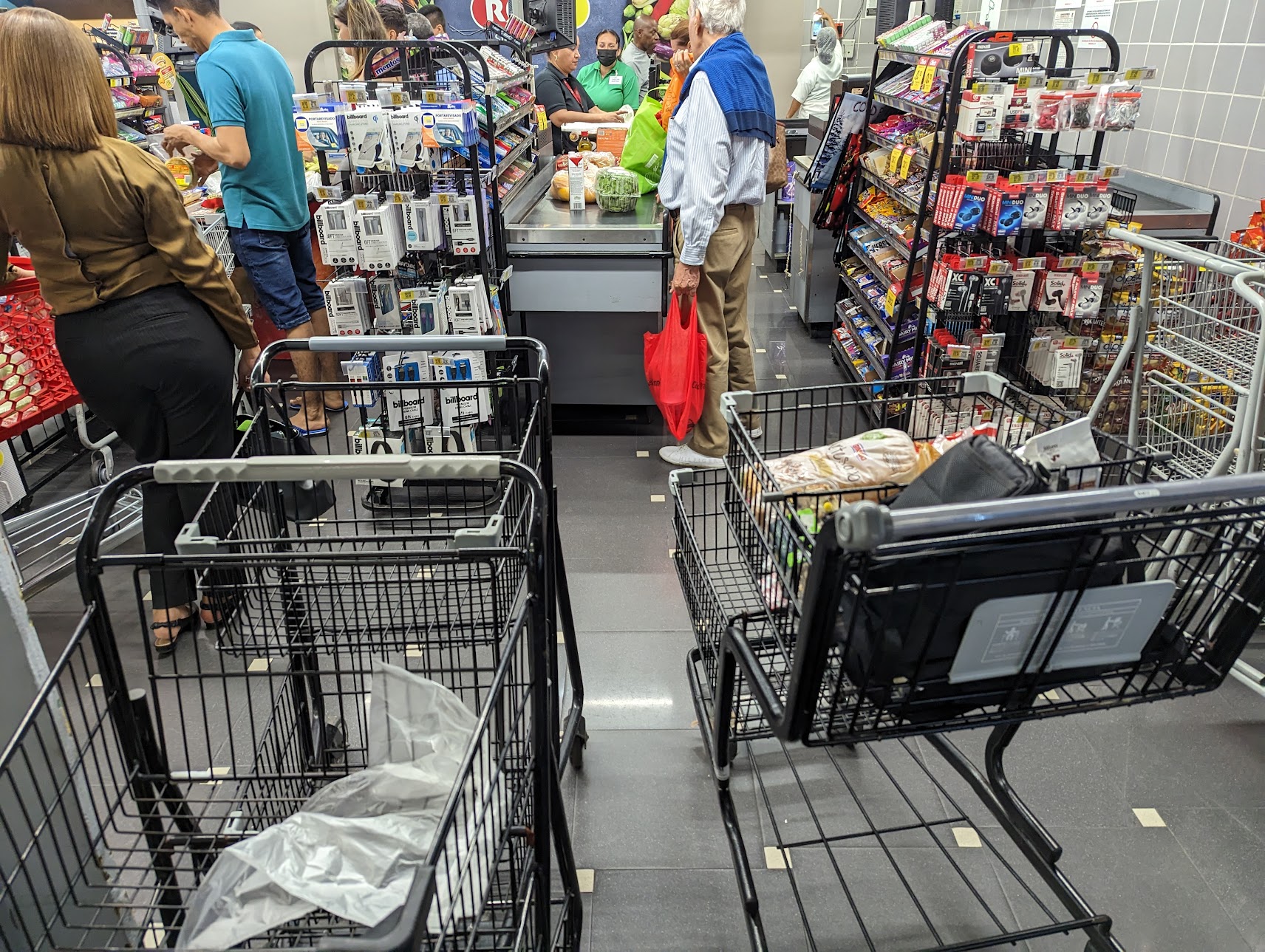
I noticed a thing at grocery stores in Latin America months ago that has broke my mind ever since.
For completely unfathomable reasons (to me at least) when you are done unloading your shopping cart at a till you don’t push it through and back to the area you got it from, nope.
Instead, once your cart is empty, you walk the empty cart back through the line and ditch it in the area between the tills and the aisles, so it’s in everyone’s way and everyone doing their shopping has to navigate around the pile of empty carts.
The first time I noticed it was in Paraguay and I just assumed I must be missing something. So I unloaded my items and started walking my cart ten feet forward to the cart storage area…. THE GASPS AND TITTERS! I sheepishly got my cart back, dragged it back through the line of people and their own carts, and left it right where it would be the most inconvenient for everyone in the store.
When in Rome…..
The Coca-Cola Café
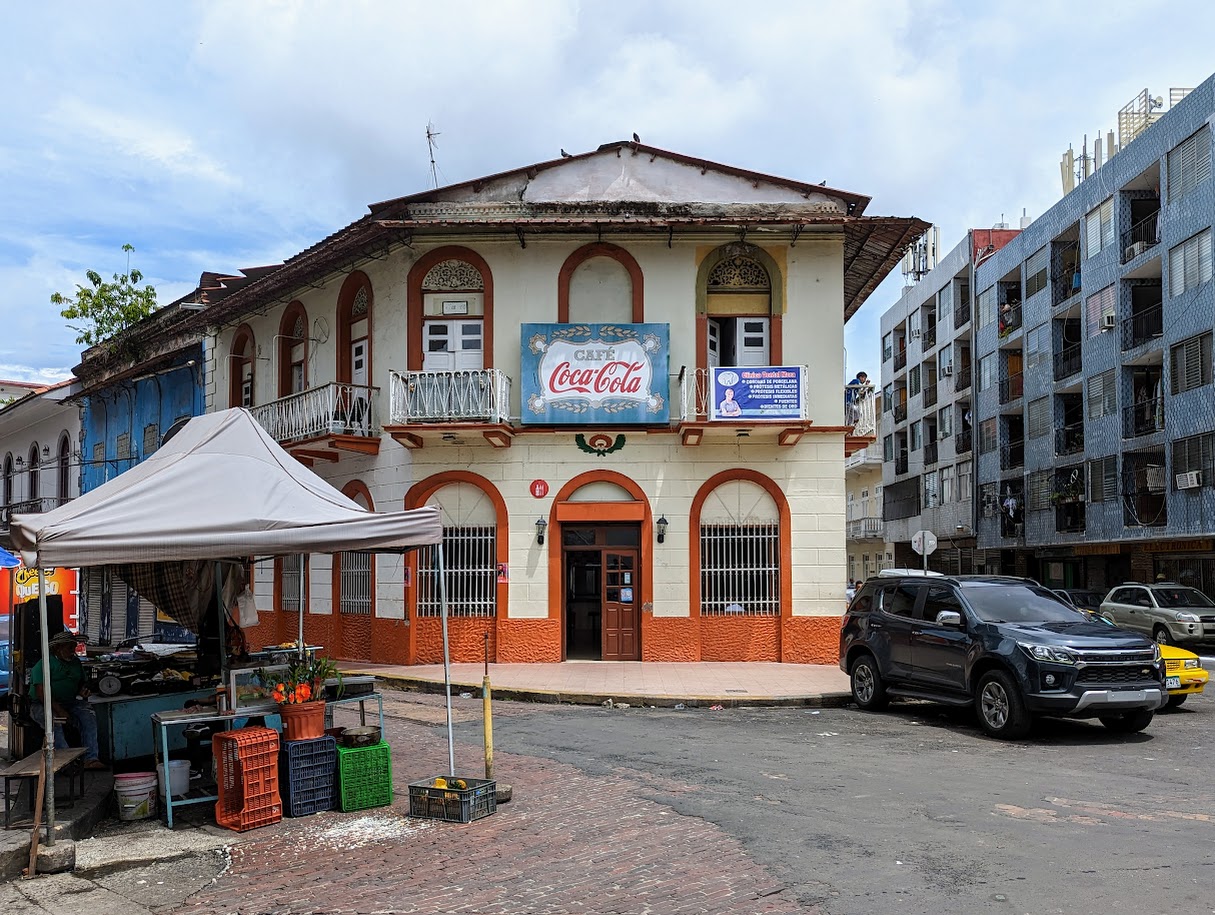
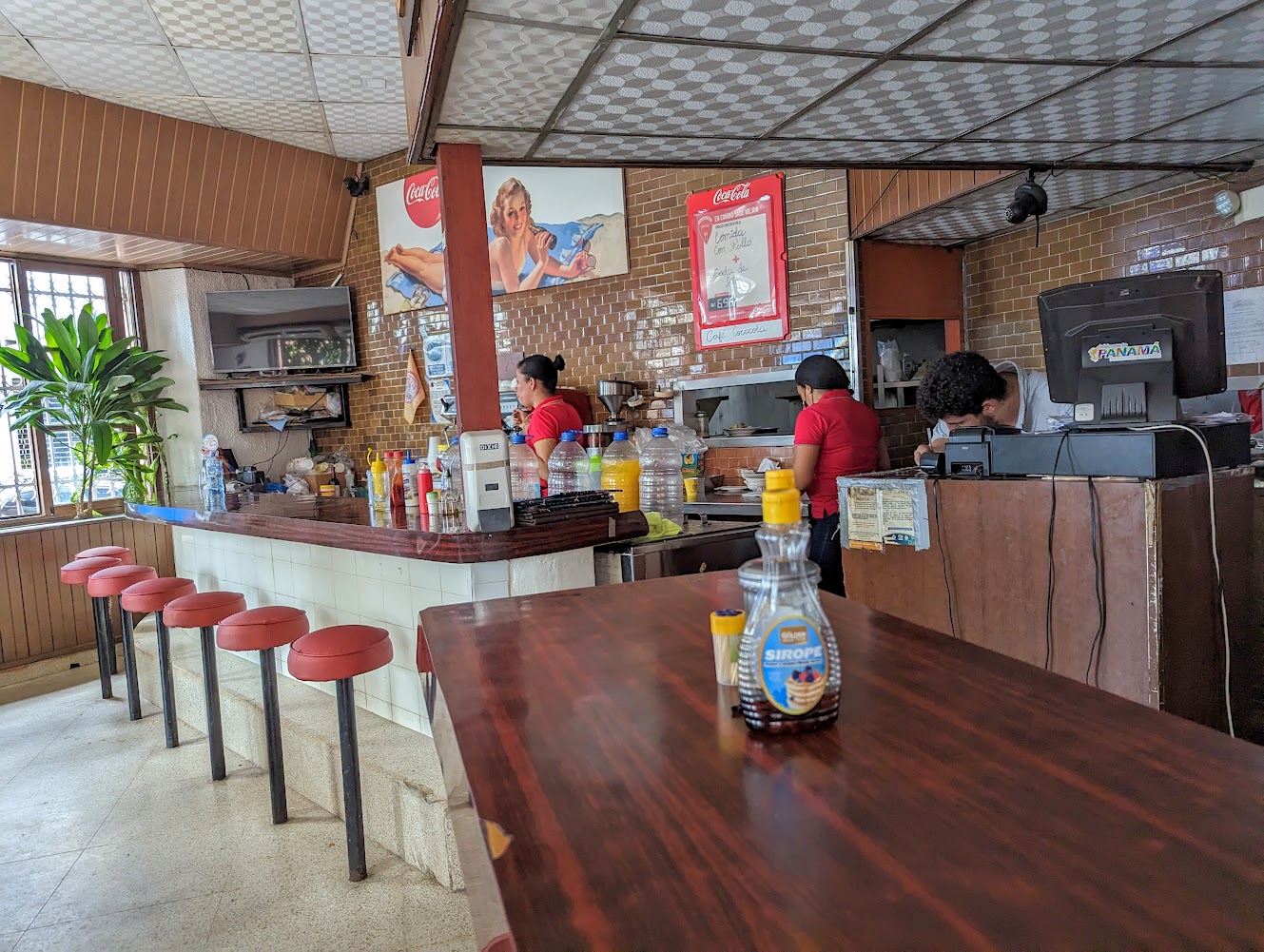
About 120 years ago Coke started being sold in Panama for the first time, the first café to popularize it in Panama City was a then 30 year old lunch counter known as Nueve Puertas (Nine Doors). Within a couple years Nueve Puertas changed their name to The Coca-Cola Café.
So why didn’t Coke jump all over them with a trademark claim? Mostly because the trademark system didn’t really exist at the time. Eventually when trademark agreements were established between the US and Panama the now 50 year old café had already been using the Coca-Cola name for 20 years.
Eventually the café and the Coca-Cola Corporation agreed that the café could use the name in perpetuity, free of charge, so long as they stocked Coca-Cola beverages.
Today the nearly 150 year old restaurant, the oldest in the country, is the only establishment in the world allowed to use the Coca-Cola name.

So you say they have breathable air AND a subway to explore?
After a week in Quito I am still struggling with the altitude, it’s hard to breathe, and it’s rainy and cold, and my place is unheated… and doesn’t have hot water. Still, I like the city quite a bit but am tired of feeling half dead so I checked for cheap flights out of Quito this weekend.
Three choices for cheap flights out of Quito: The Galapagos Islands, Mexico City or Panama City.
The Galapagos Islands might be a bit too much nature for me, I’ve already been to Mexico City this trip… so looks like Panama City is up!
(and they have a subway! the only one in Central America!)
My favourite transit related websites assure me that the Panama City Subway’s new extension to the airport is running, despite construction not being quite done and the airport not having any mention of the subway yet.
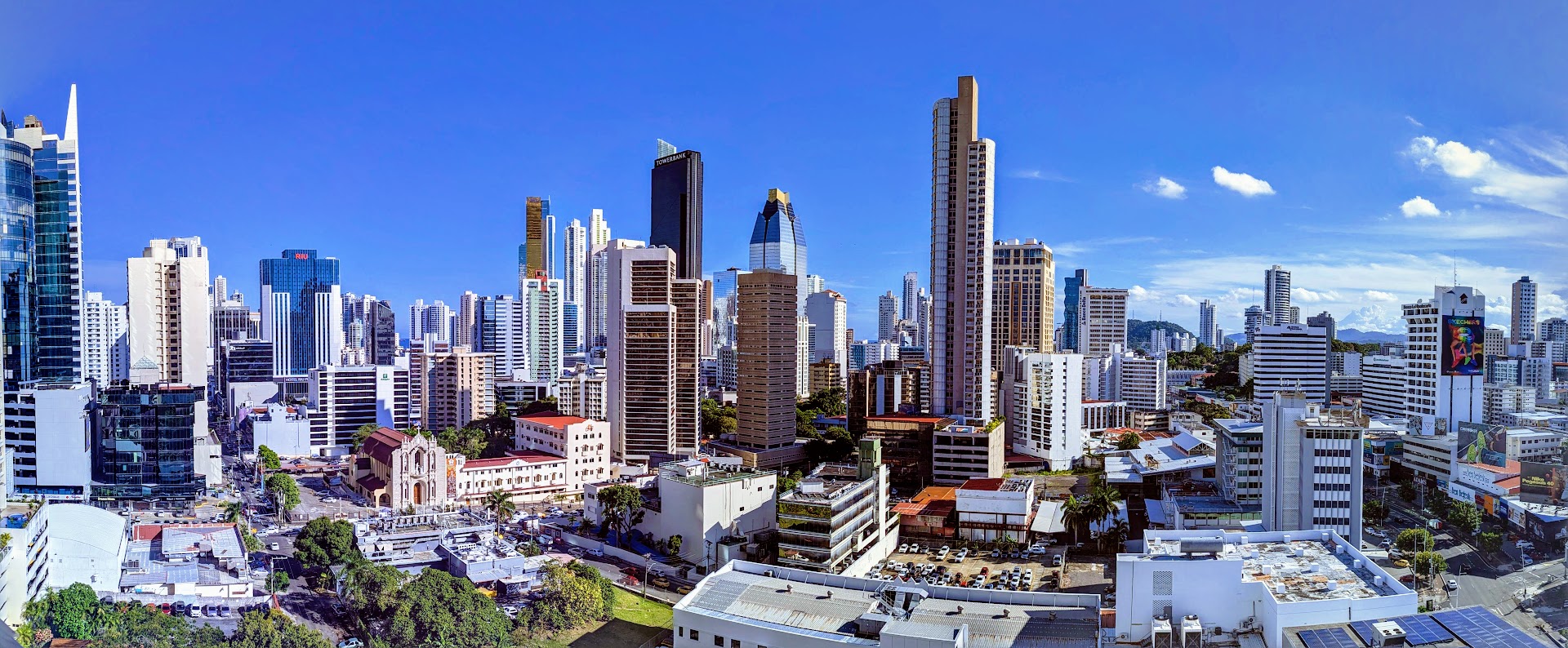
I landed in Panama City airport’s Terminal 1 around 4:30pm and followed the directions I found online for reaching the train. There is ZERO signage in the airport referencing the subway AT ALL yet. So I was instructed to follow the signs directing towards Terminal 2 until I hit the end of the airport, find some way downstairs, walk through a construction site, find a long and winding concrete sidewalk and eventually in between the terminals I would find the construction area of the subway station. I walked and walked and walked, eventually I asked a worker at the airport about the train, she insisted the new train isn’t in operation yet, hmmmm.
I kept walking until I was outdoors, and was hit with the hottest heat I have ever felt in my life, it was just 35c but with the 100% humidity it was like standing in front of a hair dryer on high, never felt anything like it anywhere in the world.
I kept walking, at one point I turned around and assumed I was lost, two guys working in the construction area saw me and pointed that I should keep going. Ok, I will.
Eventually I found a brand new, and completely empty train station.
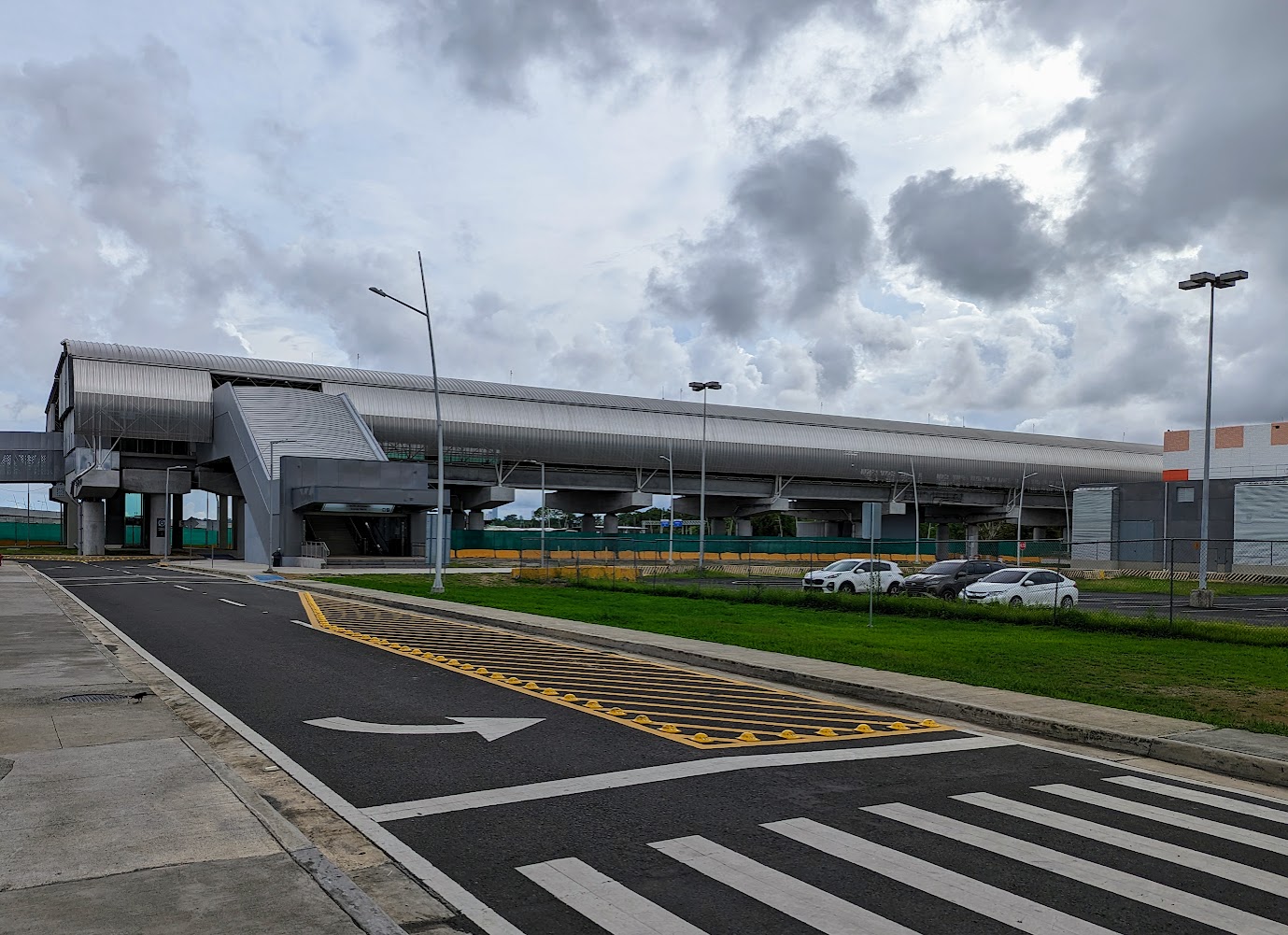
I walked into a totally dark and empty train station, bought a ticket from the machine and saw a sign telling me the next train would arrive in 9 minutes. Uh, ok sign, if you say so.
I waited, in the wildest heat I have ever felt, for 9 minutes on the empty platform until an equally empty train crawled into the station. The train…is…. air conditioned!!!

After three trains and a long walk I found my place and basically collapsed from the heat, I’m here but it’s gonna take some thinking about how to deal with the weather.
No pics, it wasn’t really that sort of situation
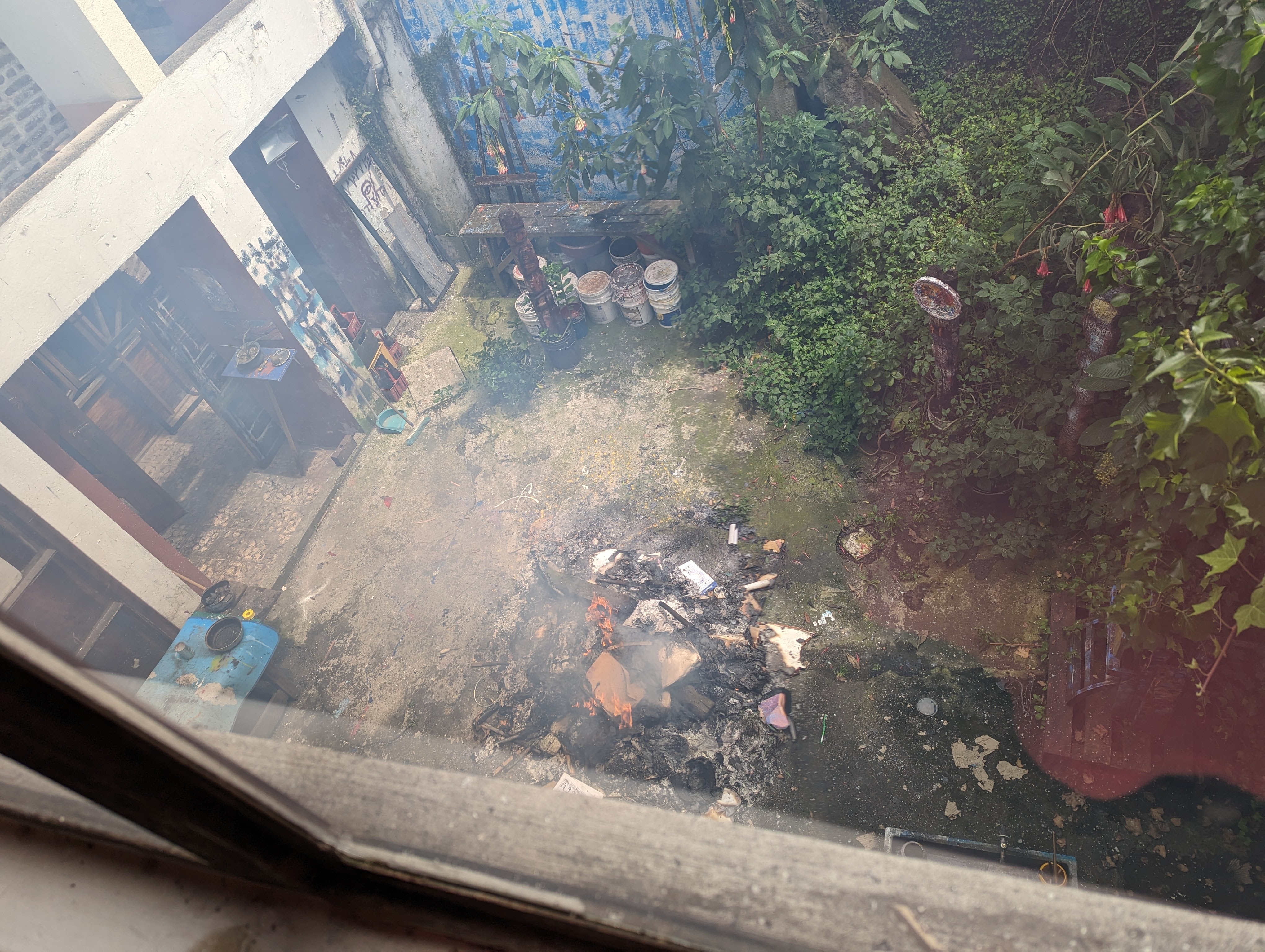
The current bit of rain coming down and the stock pot of water I poured from my window onto the garbage fire have helped somewhat but my Quito house is still reeking strongly of toxic garbage fire smoke so despite the wet weather I’m spending as much time outside as I can before I try to sleep tonight.
With my poor eyesight and how dark the cloudy nights are, plus my endless gasping for breath at altitude, I move hilariously slow after dark here. I went walking after work and eventually made my way further south than I have this week to where the old city starts changing to the rougher southern barrio.
My lunch today at a cafe near my place was not edible and so I’m starving, I don’t see a lot/any open places but a nearby street corner has a young guy grilling skewers of chunks of beef hearts and chicken gizzards (not uncommon here and in Peru) over a fire fed from torn up wooden pallets. A handful of young people are huddled in a doorway on the steps of the closest building with their offal on a stick, staying out of the light rain.
I get one of each and stand around awkwardly, the kids on the steps shuffle to make room for me and I sit down with them. This is definitely a different part of Quito than I’ve experienced before but they seem better than ambivalent to my presence. The 30 seconds or so I wait for the meat to cool is just long enough for me to exhaust all my conversational Spanish and I eat in silence with the occasional bit of teasing from the young people.
It’s very dark in the stairway so it takes me a bit to notice that one guy is using a sewing needle dipped in ink, taped to a pen to tattoo his buddy’s face, just below the eye. I can only assume he’s adding a line of tears, one for each year since she broke his heart.
As I’m finishing my meat (which I’m not wild about) a very scrawny young white guy with tons of face tattoos walks up with three giant machetes in hand. I’ve seen him around a few times this week, he juggles the knives at red lights for pocket change. He orders skewers and walks over, everyone knows him, he stares at me. I tell him I’ve seen him juggling a few times this week and he’s awesome (he is) and that I’ve yet to contribute. I hand him enough to cover his food and a bit more. He thanks me in American accented English and sits where I was sitting. He’s the first North American I’ve talked to since I got to Ecuador.
The gang send me off with a friendly mix of goodbyes that clashes with their tough appearance and I make my way back home again, feeling really good despite the eternal shortness of breath.
Maybe it’s a traditional Ecuadorian welcome?
Woke up this morning to eyes burning and tearing and bedroom full of smoke. After some panic I figured out a neighbor is taking care of his garbage…. with fire…. under my bedroom window….which does not really close… yup.
 A Bit Gone